 Image 1 of 1
You can eat nutritious foods, hit your protein goals, and still feel like your energy, cravings, or blood sugar are all over the place.
Sometimes, the missing piece isn’t just what you’re eating — it’s when you’re eating it.
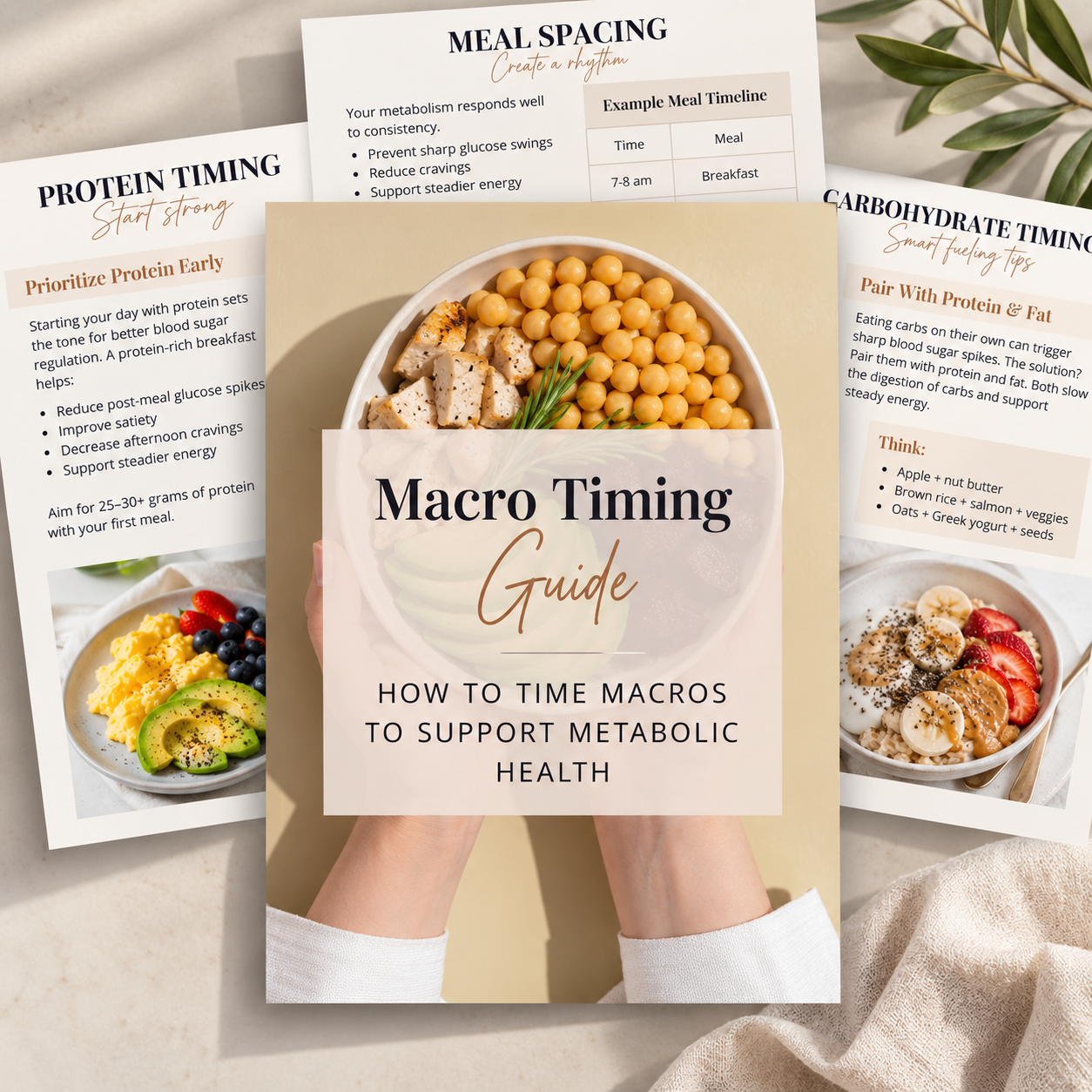
The Macro Timing Guide is a simple, practical resource designed to help you understand how meal timing and macronutrient balance can support more stable energy, blood sugar, appetite, and metabolic health.
You’ll learn how to strategically time protein, carbohydrates, and fats throughout your day without making nutrition unnecessarily complicated.
The guide covers protein timing, including why starting the day with approximately 25–30+ grams of protein may support satiety, steadier energy, muscle maintenance, and blood sugar regulation.
You’ll also learn how to approach carbohydrates more strategically by pairing them with protein and fat and placing more of your carbohydrate intake around periods of activity and strength training.
Metabolic health isn't only about hitting numbers.
This guide also walks you through practical meal spacing, including a sample daily eating rhythm, an overnight break between dinner and breakfast, and simple ways to incorporate movement after meals.
Even 5–10 minutes of light movement after eating can be incorporated into your routine, whether that's taking a walk, cleaning the kitchen, stretching, or simply moving around the house.
Macro timing can be useful for anyone wanting to be more intentional with nutrition, but the guide specifically discusses its application for people navigating insulin resistance, hormone imbalance, perimenopause, and periods of high stress.
You don't need a complicated eating schedule.
The guide finishes with an easy daily cheat sheet and a simple balanced-meal formula:
Start with protein → add carbohydrates → include healthy fats.
You’ll also receive an example day showing exactly how these principles can look from breakfast through dinner.
A practical, easy-to-follow guide for anyone who wants to stop guessing and start using meal timing more intentionally to support metabolic health.
For educational purposes only. This guide is not intended to diagnose, treat, cure, or prevent any disease or replace individualized medical care.
You can eat nutritious foods, hit your protein goals, and still feel like your energy, cravings, or blood sugar are all over the place.
Sometimes, the missing piece isn’t just what you’re eating — it’s when you’re eating it.
The Macro Timing Guide is a simple, practical resource designed to help you understand how meal timing and macronutrient balance can support more stable energy, blood sugar, appetite, and metabolic health.
You’ll learn how to strategically time protein, carbohydrates, and fats throughout your day without making nutrition unnecessarily complicated.
The guide covers protein timing, including why starting the day with approximately 25–30+ grams of protein may support satiety, steadier energy, muscle maintenance, and blood sugar regulation.
You’ll also learn how to approach carbohydrates more strategically by pairing them with protein and fat and placing more of your carbohydrate intake around periods of activity and strength training.
Metabolic health isn't only about hitting numbers.
This guide also walks you through practical meal spacing, including a sample daily eating rhythm, an overnight break between dinner and breakfast, and simple ways to incorporate movement after meals.
Even 5–10 minutes of light movement after eating can be incorporated into your routine, whether that's taking a walk, cleaning the kitchen, stretching, or simply moving around the house.
Macro timing can be useful for anyone wanting to be more intentional with nutrition, but the guide specifically discusses its application for people navigating insulin resistance, hormone imbalance, perimenopause, and periods of high stress.
You don't need a complicated eating schedule.
The guide finishes with an easy daily cheat sheet and a simple balanced-meal formula:
Start with protein → add carbohydrates → include healthy fats.
You’ll also receive an example day showing exactly how these principles can look from breakfast through dinner.
A practical, easy-to-follow guide for anyone who wants to stop guessing and start using meal timing more intentionally to support metabolic health.
For educational purposes only. This guide is not intended to diagnose, treat, cure, or prevent any disease or replace individualized medical care.